Bikepacking bikes · Bags & gear · Silver City overnights
Bikepacking begins with a simple question: what if we didn’t turn around and go home? Pack what you need for a night outside, choose a dirt road or trail that suits you, and give the ride a little more time.
It’s part of a long tradition of exploring and camping by bicycle, carried forward by new ideas about bikes, bags, and where a ride might lead. You don’t have to cross a continent to be part of that story. A night out near home is a fine place to begin.
We have a range of bikepacking bike options in the shop from Salsa, Surly, Priority, Fairdale, Giant, and Liv. And if you already have a bike you enjoy, let’s look at what it could do before you decide to replace it.
914 N. Pope St., Silver City, NM 88061
Tuesday–Friday, 10 a.m.–5:30 p.m.
Saturday, 10 a.m.–4 p.m. · Closed Sunday & Monday.
Outside hours? Text first; appointments require confirmation.
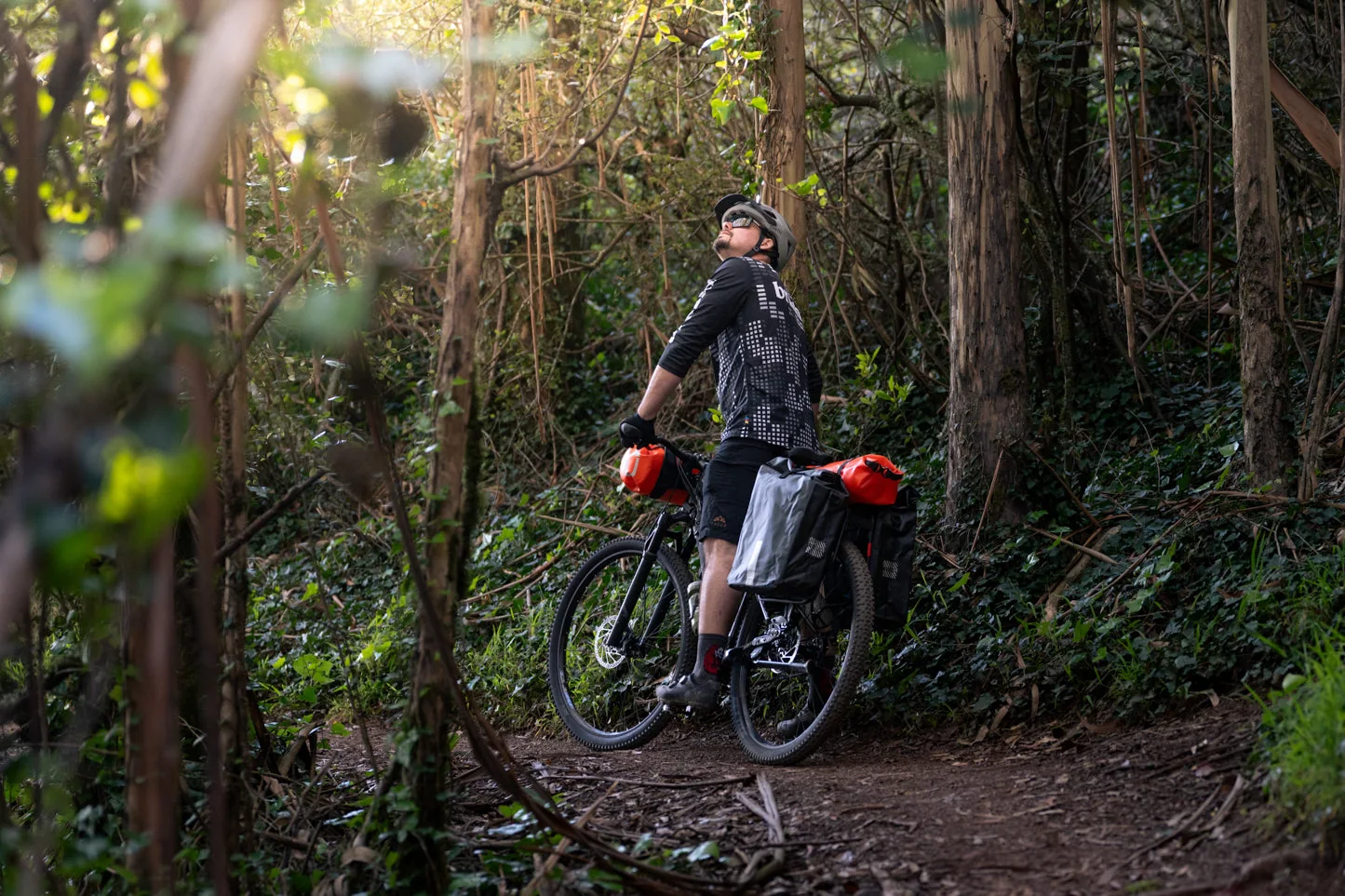
Photo: Priority Bicycles.
Find your bikepacking bike.
Some riders want a versatile bike for pavement and dirt roads; others want a mountain bike for rougher trails or an adventure bike with carrying options for longer trips. We’ll help you compare fit, tire clearance, gearing, and mounting options rather than choosing by the label alone.
Explore our new bikes, or come see the options and take a test ride. Tell us where you want to go and what you plan to carry, and we’ll help you narrow things down.
For a closer look, explore our mountain bikes and gravel bikes.
See stocked bikes online: Gravel Bikes · Mountain Bikes
Or start with the bike you already own.
You don’t need to buy a brand-new bike to go bikepacking. An older mountain bike, a well-used hardtail, or another suitable bike can be the starting point for a simple night out.
Looking for a starting point? The Bike Works, the separate nonprofit sharing our space, has lots of refurbished bikes available, including older chromoly steel mountain bikes that can be good candidates for a bikepacking conversion.
A front rack and basket, a frame bag, and a few thoughtful changes can give a suitable steel mountain bike a new purpose as a practical, retro-style bikepacking rig. We can help you explore what fits the bike, your budget, and the kind of riding you have in mind.
Tell us your budget before buying a pile of parts. We’ll look at:
- Condition: The frame, fork, wheels, tires, brakes, and important fasteners.
- Fit and terrain: Climbing gears, comfortable hand positions, and a saddle that suits the ride.
- Carrying options: Mounting points, bottle space, and suitable racks or bags.
Older parts and unfamiliar standards don’t automatically make a bike a lost cause, but not every bike is a sensible conversion. We’ll discuss compatibility, cost, and what needs attention before the trip versus what can wait.
Little Walnut / Bear Mtn. Road Loop
You don’t have to ride far from Silver City to spend a night at the edge of the Gila. Head out from Silver City Cycles on Bear Mountain Road, connect with the Continental Divide Trail, and return on Little Walnut Road, with a night under the stars between the roads. It’s a chance to try your setup, enjoy an evening outside, and head home the next day.
This is a first bikepacking trip, not necessarily a first mountain-bike ride. Choose a ride that matches your trail skills, and allow time to get used to riding with a load. Talk with us about the trail connections and current conditions before heading out.
Make it a two-day ride.
- Ride out: Start at Silver City Cycles, 914 N. Pope St., and head out of town on Bear Mountain Road to connect with the CDT. Allow extra time for the climb with a loaded bike. Walking a tricky section is fine.
- Sleep out: Make camp on National Forest land along the connecting trail section between Bear Mountain Road and Little Walnut Road. Some areas are better suited to a comfortable night out than others, but there isn’t one particular campsite you need to reach. Leave yourself daylight to look around and settle in, keeping your camp clear of the trail.
- Ride home: Pack up, leave your site as you found it, and return on Little Walnut Road to Silver City Cycles to complete the loop. Take note of what worked, what rubbed or rattled, and what you packed but didn’t need.
No facilities. Leave no trace.
This is dispersed camping, with no toilets, drinking-water facilities, or trash collection at your overnight spot. Bring what you need and be prepared to take everything home.
Use an existing durable camping spot where possible, and pack out all rubbish, food scraps, toilet paper, and wipes. For bathroom breaks, follow Leave No Trace waste-disposal guidance: where burying human waste is appropriate, dig a cathole 6–8 inches deep, at least 200 feet from water, trails, and camp, then cover and disguise it. If you cannot dig a suitable cathole, pack out human waste in a purpose-made waste bag. Leave the spot looking as though you were never there.
Keep the first night simple.
- Carry your water: Bring enough for the ride, cooking, overnight, and return, with a reserve for delays. Don’t plan on a refill at Little Walnut; the Forest Service warns that water is unavailable at the picnic areas.
- Camp along the trail, not in the picnic grounds: Little Walnut Road is the return route. The Little Walnut picnic area is day-use only, not the overnight campsite.
- Choose your night: Pick a forecast your sleep setup can handle, including the overnight temperature and any chance of rain.
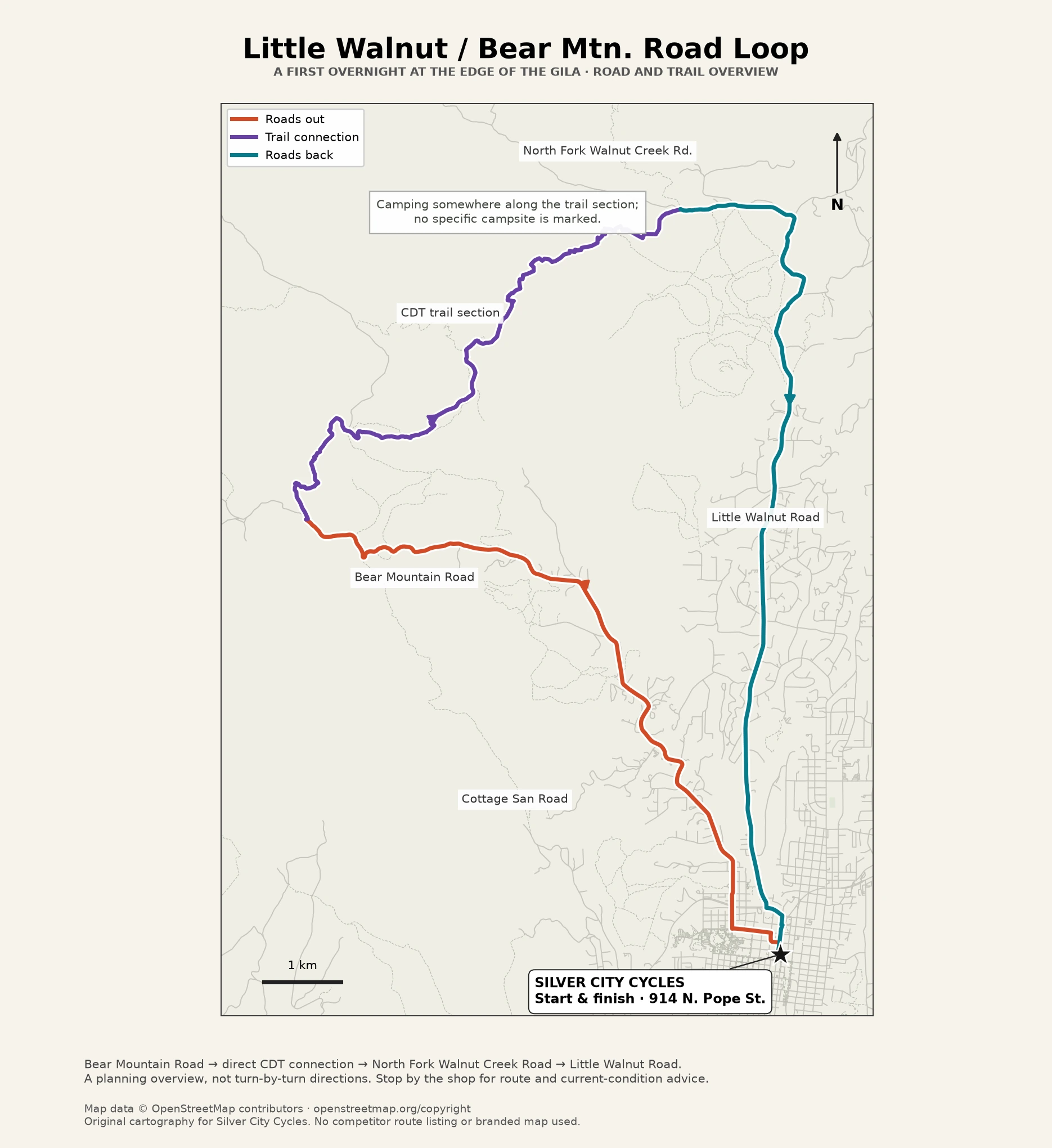
Open the map at full size to zoom in, or save a copy to your phone before you leave.
This map gives you the shape of the loop, not turn-by-turn directions. Stop by the shop and we’ll help you understand the connections and check current conditions. Camping is along the National Forest trail section between the roads, not at a marked campsite.
Map data © OpenStreetMap contributors. For the wider area, see the Gila National Forest maps and guides.
One of the beauties of the Gila: free dispersed camping on National Forest land along this trail section, with no reservation or permit needed for a self-guided overnight. Ordinary trail use here does not require a permit either.
Check current forest alerts for temporary closures and fire restrictions before heading out. E-bikes must use designated motorized routes, not non-motorized Gila National Forest trails.
Stop by the shop before you go. We can help you sort the bike, the bags, and what to bring, and talk through the areas to look for when choosing a place to camp.
One night out. Plenty to learn.
Pack for the conditions you expect, not a picture of somebody else’s trip. Give these essentials some thought before adding extras:
- Sleep and shelter: A sleeping setup and protection suited to the overnight weather.
- Food and water: Enough for the trip and a delay. Confirm any planned refill sources before leaving; for the Little Walnut overnight, carry your water as described above.
- Food storage: Plan how you’ll store food, rubbish, and scented items safely overnight. Follow the Forest Service’s wildlife guidance.
- Layers and light: Warm and waterproof clothing, camp lighting, and bike lights if the ride runs late.
- Navigation and repairs: Offline maps, a charged device, and a pump, tube or tubeless supplies, and tools that match your bike. Practice using the repair kit before depending on it.
- A backup plan: Tell someone your route and return time. Know how to shorten the trip or get help.
Take a short ride with your bags packed before leaving town. Try a climb and some braking, check that steering and tire clearance are unobstructed, and look for rubbing or shifting bags.
Bags, racks, and the space between.
We carry bikepacking bags and can help you choose a combination for your bike and load. You don’t need a matching set to carry those essentials. Let’s look at ways to fit the load to your bike, using equipment you already own or can borrow where it makes sense.
- Racks and panniers: If you already have them, check whether they suit the trip before replacing them just to use a different style of bag. Check mounting compatibility and heel clearance.
- Water carrying: Plan where bottles or other water storage will go before filling every available space with camping equipment. Think about the longest gap between reliable refill points, not just the total length of the ride.
Matching bags are optional. Keeping them out of the wheels isn’t.
ALMSTHRE. Useful bags. Beautiful colors.
Created by cyclists from San Diego, ALMSTHRE makes practical bags with a lot of personality. We carry a range of their gear because we like the quality, thoughtful details, and beautiful colors. Useful equipment doesn’t have to be boring.
Their wider range includes handlebar and frame bags, top-tube and stem bags, compact saddle bags, hip packs, and ride wallets. Think snacks, tools, a light layer, and the things you want close at hand, whether you’re heading out for an afternoon or adding the finishing touches to an overnight setup.
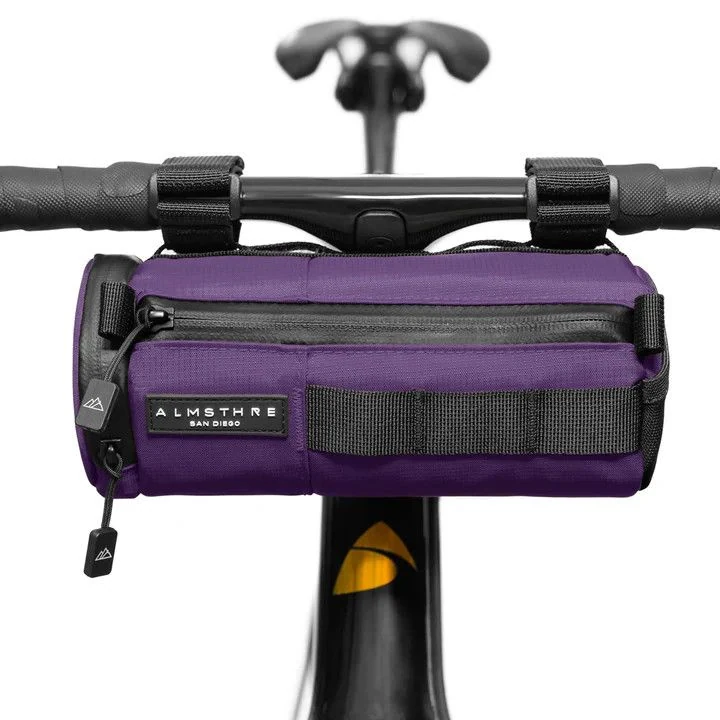
Compact Bar Bag
VioletSmall essentials up front, with a welcome splash of color.
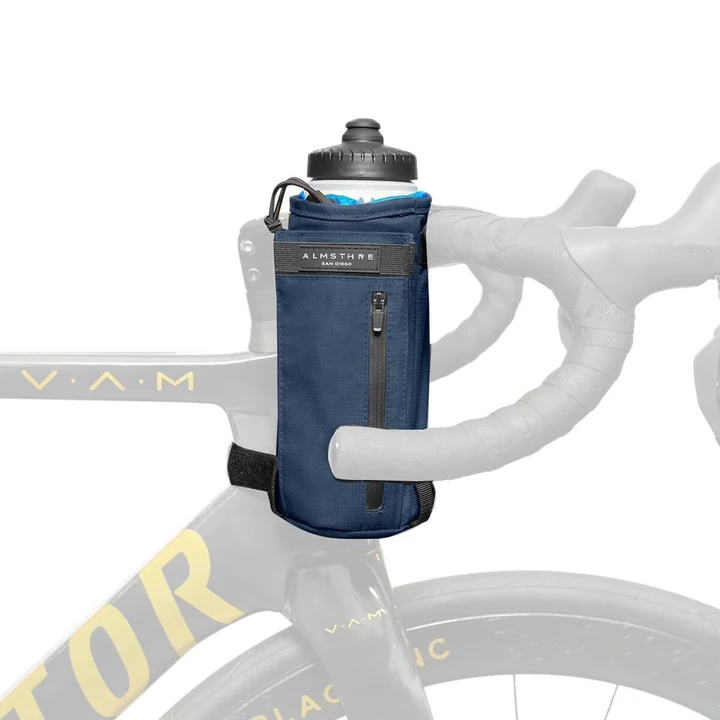
Stem Bag
Cosmic BlueKeep a bottle or snacks within easy reach.
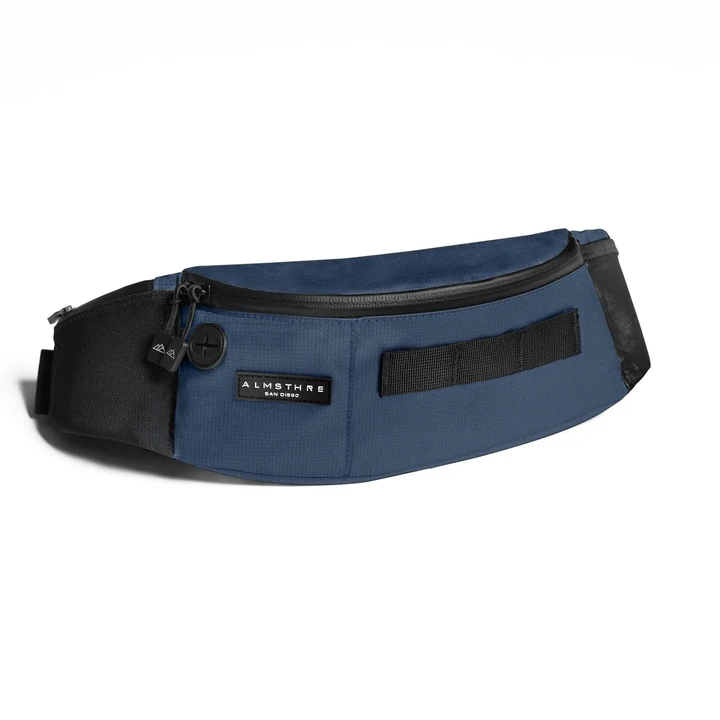
Hip Pack
Cosmic BlueA place for essentials that comes with you off the bike.
Also in our store: Signature Bar Bag in Midnight Black, Top Tube Bag in Midnight Black, and Compact Bar Bag in Sterling Silver. Come compare colors, sizes, and how they fit your bike.
Product photos: ALMSTHRE, from our online-store listings.
Handlebar bags: a few ways to start.
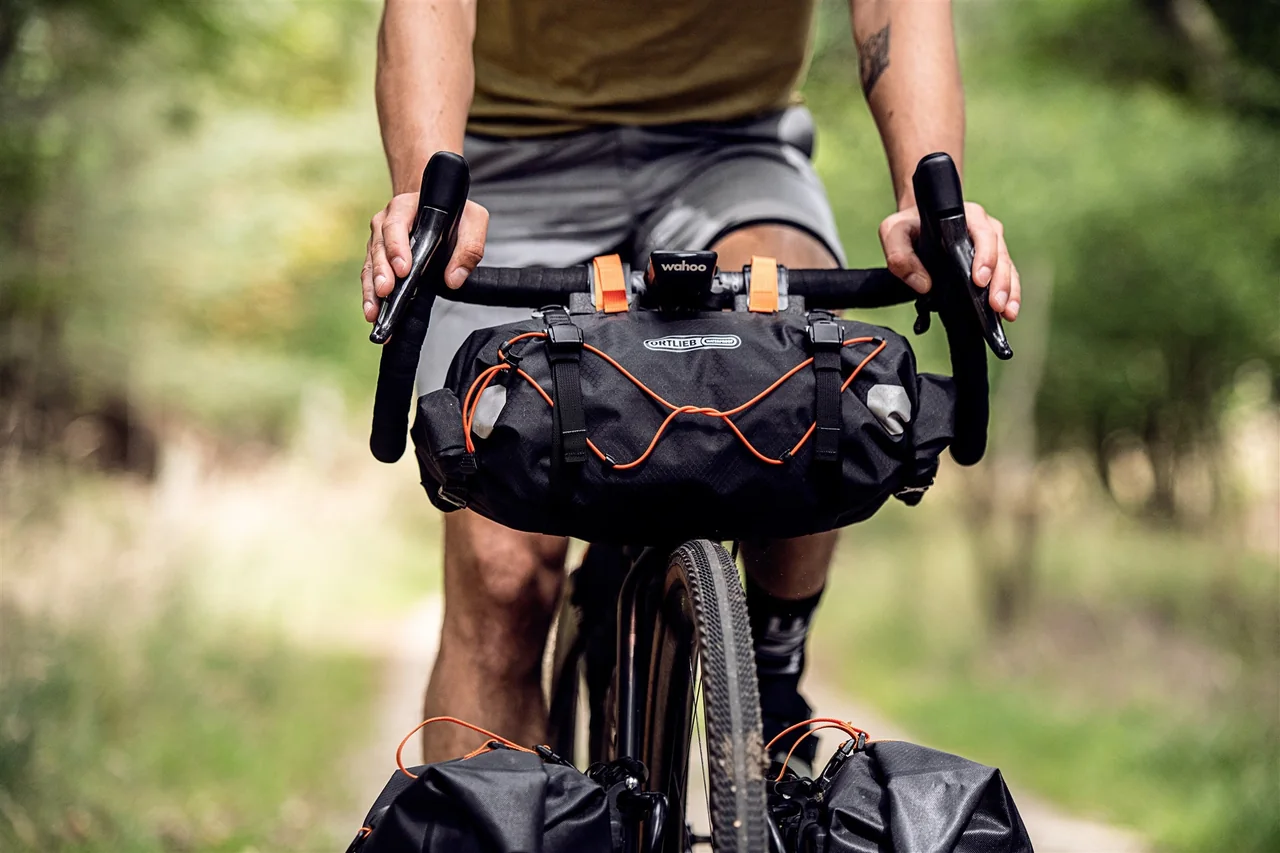
- Purpose-made handlebar roll: An all-in-one bag with its own attachments for sleeping gear or spare layers. Choose a packed width that leaves room for your hands and controls.
- Harness or cradle with a dry bag: A separate support holds the load while letting you remove the bag at camp without taking the mounting system off the bike.
- Dry bag and straps: A simple starting point for lightweight, compressible sleeping gear or spare clothes. Secure it carefully and check the loaded fit.
- Small bar bag or accessory pouch: Handy for snacks, a compact layer, and small essentials you want within reach, rather than a full sleeping setup.
In our store: RockBros bikepacking handlebar bag for a roll-style setup, or an ALMSTHRE Compact Bar Bag for smaller, easy-to-reach essentials. Browse all Handlebar Bags and Stem Bags, and ask us about fit before choosing.
Frame bags and water.
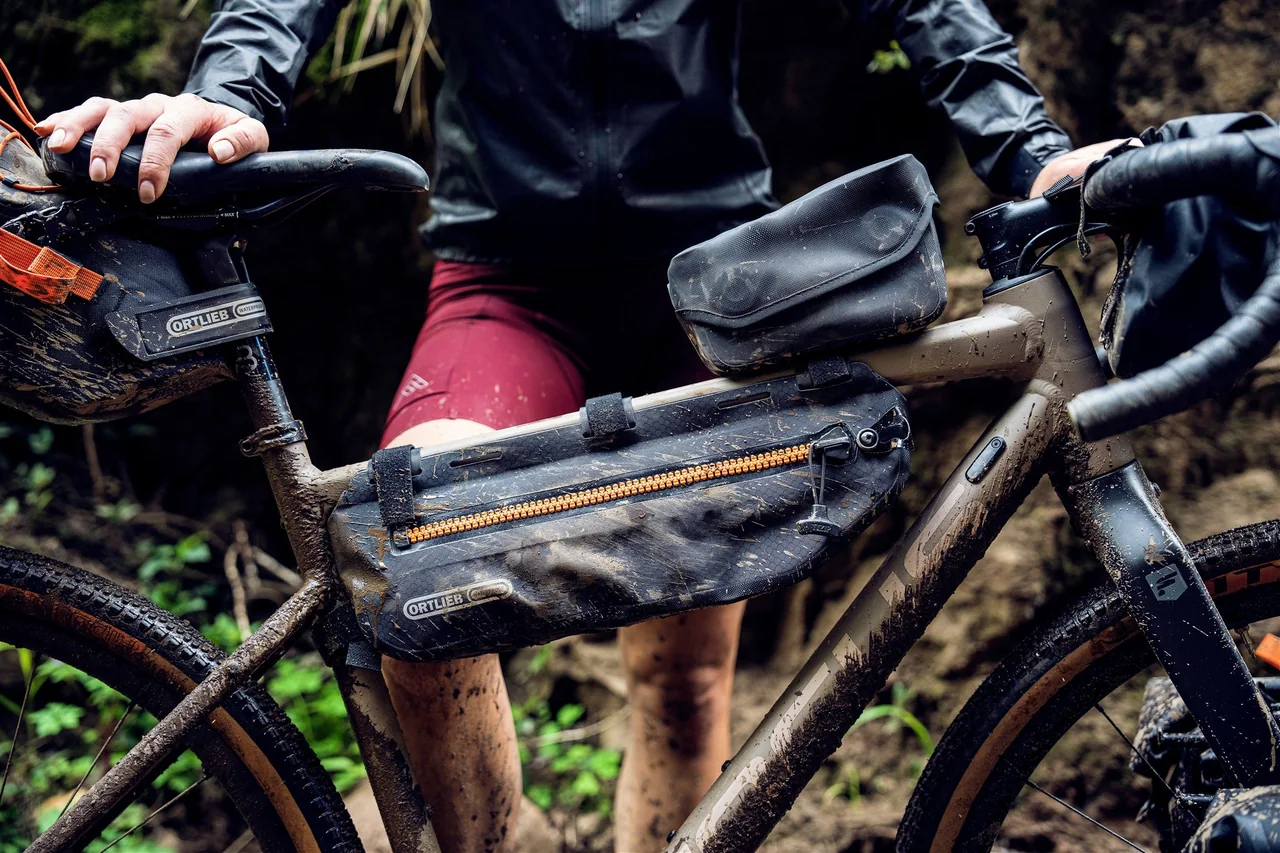
Frame bags: Useful for tools, food, and other dense items. A smaller bag may leave room for bottles; a full-frame bag calls for a different water-carrying plan.
Explore the Topeak MidLoader 4.5L and Revelate Designs Tangle, size Large, or browse all Frame Bags in our store. Compare the bag dimensions with your frame and the bottle space you want to keep.
Hydration reservoirs: A Dromedary bag, or a CamelBak or Osprey reservoir with a drinking tube routed out of the frame bag, can be a practical alternative to bottles. Flexible reservoirs can conform to awkward spaces, including the lower corner near the cranks. Choose one that fits your bag and hose opening, and keep it protected from sharp tools.
Seat packs, traditional saddlebags, and rack-supported options.
Spare clothes and a compressible sleeping bag are useful candidates for rear storage. There are several ways to carry them, and the bag’s shape and support make a difference.
Looking for a seat pack? View the Salsa EXP Series seatpack or browse all Seat Bags in our store, then check saddle-to-tire clearance and mounting compatibility with us.
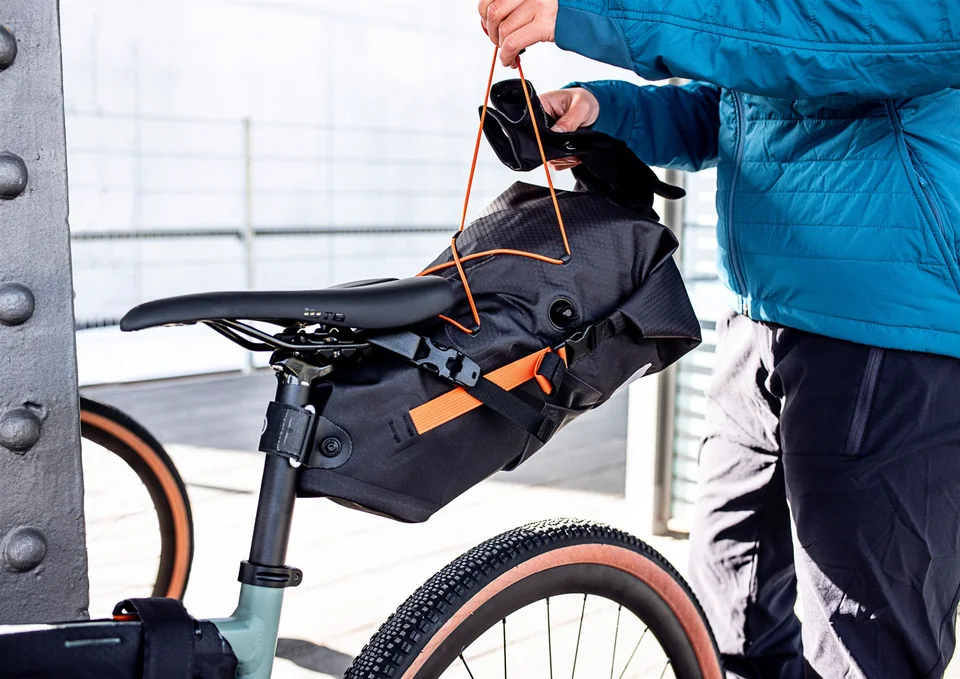
Narrow, usually tapered bags that attach behind the saddle, commonly to the saddle rails and seatpost. Roll-top closures and compression straps help fit the bag around the load; some designs include internal stiffeners to help hold their shape. Careful packing helps reduce sagging and side-to-side movement.
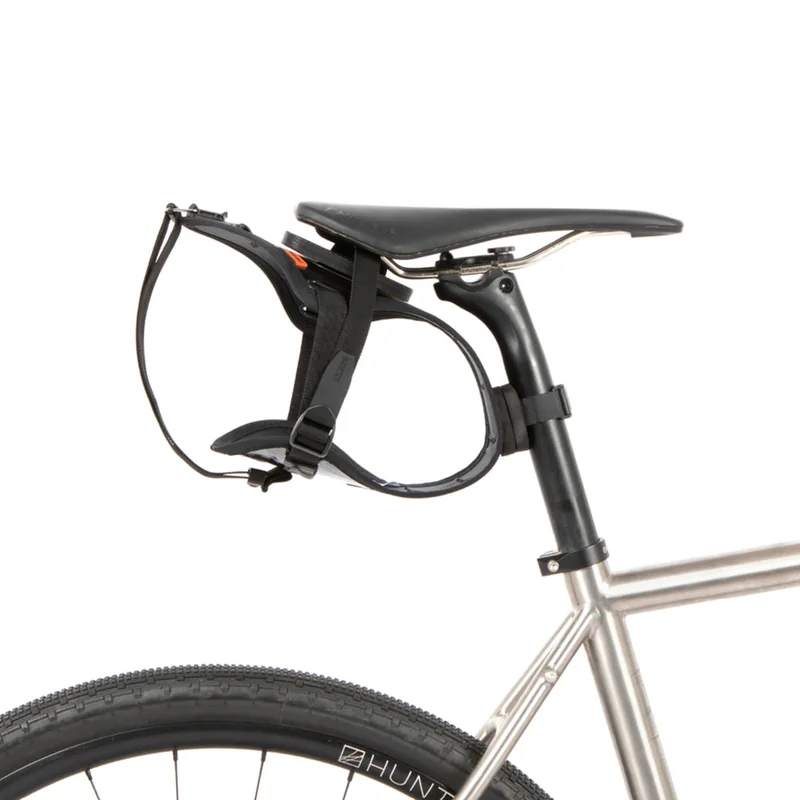
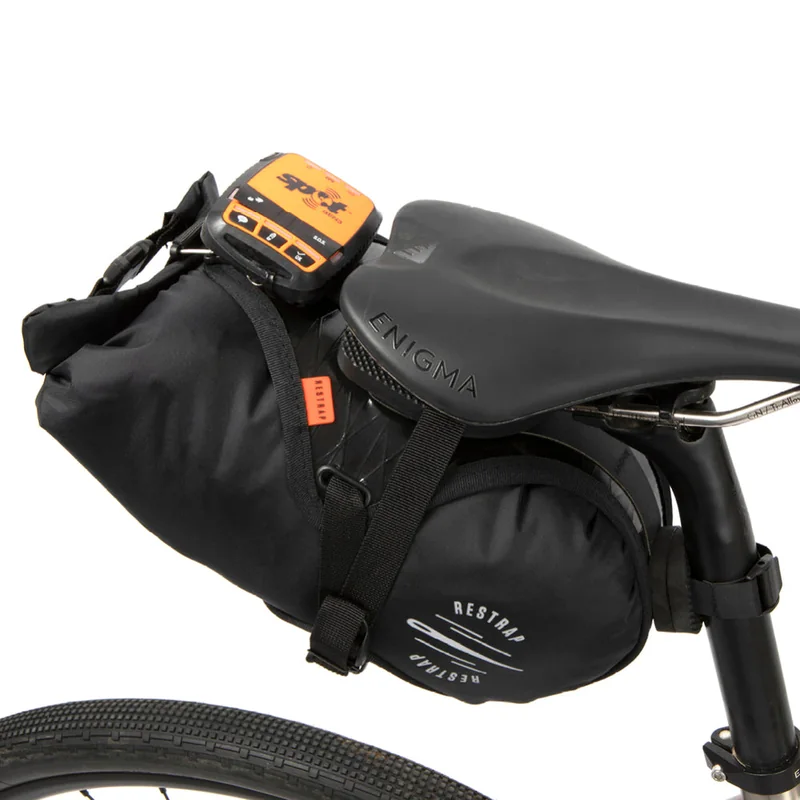
A harness or holster stays on the bike while a separate dry bag comes out for packing and use at camp. The holster may add structure, but its mounting still determines where the load goes.
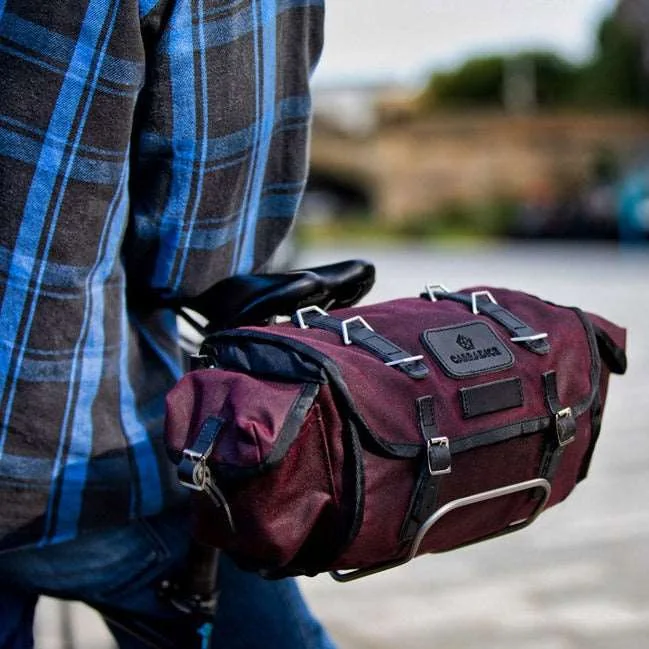
Wider bags carried across the bike behind the saddle, such as traditional Carradice designs. Their top-opening layout offers a different way to organize and reach your gear; a suitable saddlebag support can help keep the load steady and clear of the tire.
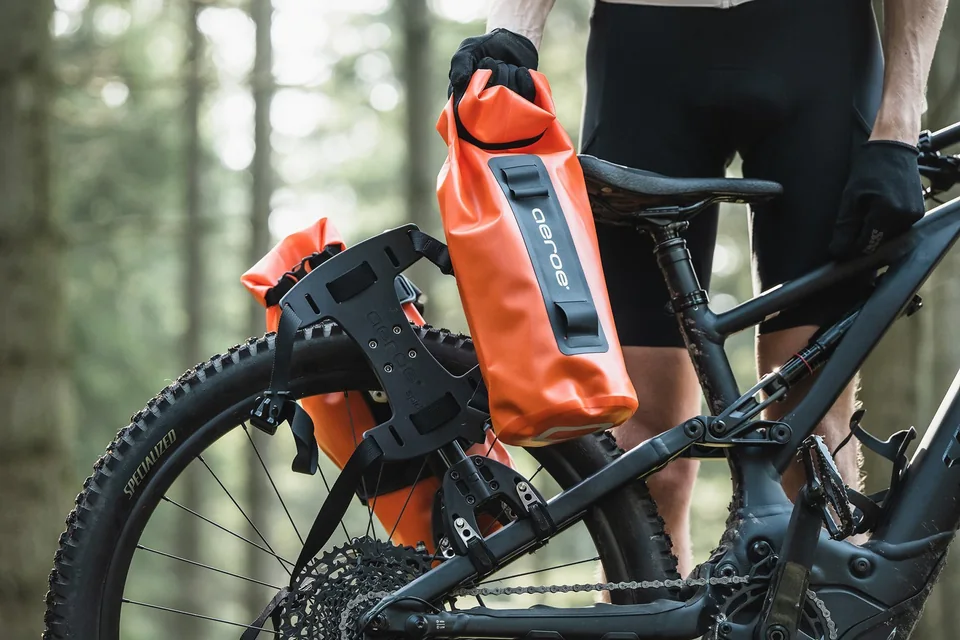
These carry the bag on a structure rather than hanging it from the saddle. Tailfin rear systems use axle or frame mounting with a seatpost connection; Aeroe Spider racks and the Thule Pack ’n Pedal Tour Rack attach to the rear seatstays rather than the seatpost. They offer carrying options for full-suspension bikes without conventional rack mounts. The right system depends on the bike, terrain, and load.
In our store: Aeroe Spider rear rack or Thule Pack ’n Pedal Tour Rack.
A saddlebag support is not automatically a way to move weight off the saddle: some, including saddle-rail-mounted Bagman supports, still transmit the load through the saddle rails.
Carrying gear up front: The Thule Tour Rack can also mount to compatible front forks. Aeroe offers a dedicated Spider Front Rack for suspension forks, a different model from the rear rack pictured above. We’ll check frame and fork compatibility, tire clearance through the full suspension travel, and mounting and load limits before fitting.
Brand examples illustrate different approaches; availability through the shop varies. Ask us about bags, support options, and what fits your bike before buying.
Check packed bags for free steering, cable and control access, and tire clearance through suspension travel. Check any saddle or seatpost attachments for compatibility, including dropper-post requirements. Follow the equipment manufacturers’ mounting and load limits, and ask before modifying a frame or fork.
For more ideas, explore BIKEPACKING.com’s bag and packing guide and setup guide. These are independent resources; ask us about current stock and fit before buying.
Comparing rack-supported setups? Browse All Bike Racks (Front Racks · Rear Racks) and All Bike Bags in our online store.
Space for gear. More hand positions.
More room for a handlebar bag is one reason to consider different bars. More comfortable hand positions are another. If your hands go numb or your wrists get uncomfortable on longer rides, let’s talk about bar shape, sweep, reach, and your overall setup, not just what fits between the grips.
- Wider or flared bars: Wider drop bars can create more room for a larger roll or bag, but still need to suit your reach and riding position.
- Swept-back bars: A different sweep may offer a more comfortable wrist position. The best shape depends on your fit and riding style, not simply the most sweep.
- Surly Corner Bar: Try drop-bar-like positions while retaining compatible mountain-bike brake levers and shifters. It offers tops and drops, not the same hood position as a traditional road bar.
Explore the Surly Corner Bar in our store: 46 cm or 54 cm. Both listings use a 25.4 mm clamp; we’ll check the fit with your stem and controls.
We’ll check stem and control compatibility, reach, and cable or hose length. A bar that fits your bag still needs to fit you.
For a closer look at hand positions, saddle choices, suspension seatposts, and pedals for longer days, explore our Ride Comfort guide.
Do it yourself, or let us help.
For a conversion, repairs, or a pre-trip check, our service department can help you decide what needs doing. We enjoy a good mechanical puzzle and a practical solution.
Prefer to learn or do the work yourself? The Bike Works, the separate nonprofit sharing our space, has DIY tool stations for learners and experienced home mechanics. Ask about access and available equipment.
A bigger desert adventure: the Monumental Loop.
For a more demanding, multi-day trip in southern New Mexico, consider the Monumental Loop around Las Cruces, linking desert roads, singletrack, and sandy washes through Organ Mountains–Desert Peaks National Monument.
Rough terrain and desert water logistics make this a step up from a first overnight. Read BIKEPACKING.com’s Monumental Loop route guide and planning notes before choosing your dates and setup. We can help you think through the bike, bags, water-carrying capacity, and repair supplies for a longer trip.
Already on a long-distance ride?
For priority repairs, tires, arrival information, and finishing logistics while riding the GDMBR or Tour Divide, visit our Divide rider support page. Following the Southern Tier or touring on paved roads? See Southern Tier & Touring support.
Bring the bike, a few photos of your gear, and an idea of the night out you have in mind. Or text your questions and we’ll help you figure out a sensible next step.